Client Story · Ongoing

Three times the sales.
A tenth of the paperwork.

Stark Industrial Products came to us wanting more sales. Ten months in: four times the traffic, three times the sales through the site, not a dollar spent on ads. And when the new volume buried their back office, we built the software that runs it. Here’s the whole story.

“An order used to be twenty minutes of typing across three different programs before the box could go out the door. Now it’s a couple of clicks and the label’s printing. We’re doing three times the business through the website, and the office is calmer than it was when we were smaller. Whatever we need next, they build it.”

Dusty StarkOwner, Stark Industrial Products
The Numbers

What ten months looks like.

Measured against where Stark was when we started. Your business would look different. The shape of the change is what transfers.

Sales through the website, in the first ten months
Organic traffic to the site, over the same ten months
Spent on ads. Everything above grew without them
Minutes of paperwork per order, since their system went live

Sales and order figures are Stark’s own. Traffic is from Google Analytics.

Where It Started

They didn’t come to us for software. They came to us for customers.

Stark Industrial Products is the kind of business East Texas is full of and the internet undersells: a real company with a real reputation, a team that knows a technical field cold, products people go searching for every day. The website worked, technically. It just sold the company short.

Under the hood was the usual reason why. More than a thousand product listings, spread across the website and the other platforms they sell on, written in a hurry, years apart, by different people. Same part, three different descriptions, none of them in the words a buyer types into a search bar.

So the first job wasn’t clever. It was thorough. And it worked well enough to cause the second job.

What We Did

Growth first. Then the machine to handle it.

Two different jobs for one client, and the order matters: the software exists because the growth worked. Most businesses get sold one or the other. Stark needed both.

01
Growth

Every product they sell, rewritten to be found.

We rewrote all of it: more than a thousand listings, across the website and every platform they sell on, redone in the plain words buyers use when they go looking. On the site itself we tightened up the product pages and added buyers’ guides: pages that help someone land on the right part, with Stark’s expertise and phone number sitting beside them while they decide. In a field this technical, the seller who explains things gets the call. And the call becomes the sale.

Result: four times the organic traffic, and three times the sales through the site. Not a dollar of it from ads.
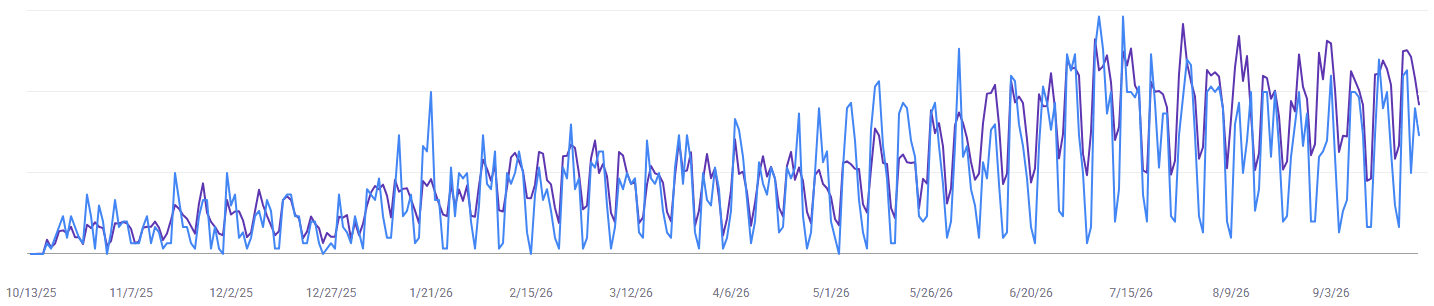
Stark’s Google Search Console chart: clicks and impressions from Google search climbing steadily from the first month on
Swipe to see it all →Clicks from Google searchTimes shown in Google resultsFrom Stark’s Google Search Console.
02
The Good Problem

Then the growth broke the back office.

A few months in, orders were arriving faster than the paperwork behind them, and the paperwork lived in three inboxes, a spreadsheet, and a group text. Every sale kicked off the same ritual: type the customer into QuickBooks, walk the stock count down on the website so nothing double-sold, then type it all again on the shipping computer for the label. Twenty minutes an order, and keeping stock straight across three sales channels swallowed ten more hours a week on top. They’d bought ShipStation for the shipping half, and it never fit how they work. So the mistakes a growing business can’t afford started landing: parts sold that weren’t on the shelf, boxes to old addresses, invoices that never went out.

The best problem a business can have is still a problem. This is the moment most owners start drowning in their own growth.
Every order, before
  1. 1Type the customer into QuickBooks
  2. 2Walk the stock count down on the website by hand
  3. 3Type it all again on the shipping computer for a UPS label
  4. 4Print the packing slip, send the invoice, hope nothing got missed
About twenty minutes. Times every order, every day.
03
The Software

Built for exactly one business: theirs.

Not another subscription. In two months we designed and built Stark their own system, shaped around how their shop runs, down to the way labels print. Now every order from every channel lands on one screen, and a phone order goes in the same way: a few words of the customer’s name finds them in QuickBooks, address and all. One button writes the invoice, prints the packing slip and shipping label out in the warehouse, sends the customer their tracking, and updates stock everywhere at once. It runs in a careful order: every check that can say no runs before anything costs money, and nothing prints until UPS has accepted the shipment. Every order also prints a one-page sheet of what it actually earned, after parts, shipping, and fees, and a cost nobody has entered yet shows as not recorded, never as zero. When a shelf runs low, the purchase order is already half-written: the system knows the supplier and the last cost, sends it out with the PDF attached, and counts the delivery in when it lands. Paperwork that took twenty minutes takes two, and an order goes from just-arrived to boxed and out the door in about five.

Result: thousands of orders processed and counting, ten hours a week of inventory-keeping nobody does anymore, and the overselling, the wrong addresses, the missed invoices stopped.
Order QueueProcess orderIn stockIn stockPartialBackorderedOrdersEvery sales channel in one queuePhone orders found in QuickBooksBackorders: invoice now, ship laterShippingOne button ships itOne box or severalOn the customer’s own UPS accountInventoryStock matches the shelfEvery channel updates at onceReturns put stock back exactlyPurchasingLow-stock listPurchase orders from QuickBooksDeliveries counted in, even partialPaperworkInvoices, slips, and barcode labelsA profit sheet on every orderAll printed in the warehouseRuns from a phone, too.
The system Stark Industrial Products runs on today.
Day‑to‑Day

What it looks like now.

The best test of this kind of work isn’t launch day. It’s a Tuesday morning, months later, with the whole team running on it.

  • Invoices write themselves the moment an order goes out.
  • Labels and packing slips print in the warehouse on their own.
  • Stock on every channel matches what’s actually on the shelf.
  • The team walks in knowing what goes out today, before anyone opens email.
  • A shelf running low has its purchase order half-written already, sent to the supplier with the PDF, and counted in when the boxes arrive.
  • Tracking numbers reach the customer without anyone touching them.
  • Every order prints what it actually earned, after shipping and fees.
  • When a step fails, the screen says which one and offers a retry, and a bell stays lit until it’s fixed.
  • Who gets the box and who gets the bill stay two parties on every document, so the box can go to a job site while the bill goes to the customer.
  • An order that can’t ship yet gets its invoice now and ships later without retyping. A return puts back exactly what came off the shelf.
Why Custom

Off-the-shelf software bends your business around it. Custom bends around you.

Every off-the-shelf tool is built for a business that doesn’t quite exist. So yours bends around it: you pay monthly for parts that don’t fit, keep a spreadsheet on the side for what it can’t do, and type the same order into three screens because none of them talk. Stark lived all of that. Software shaped around how your shop already runs is a different animal: nothing to fight, nothing to work around, and when the business changes, it changes with it.

Stark sells industrial products. Swap the nouns and it’s your business:

If you run a contracting business

Orders
Jobs on the schedule
Inventory
Materials & truck stock
The dashboard
What’s scheduled this week, what’s billed, what’s still open

If you run a machine shop

Orders
Jobs on the floor, quoted and released
Inventory
Material, tooling, and what’s out for finishing
The dashboard
What’s due this week, what shipped, what’s billed
Still Running

Live, and still building.

This isn’t a project that ended when an invoice cleared. The growth work keeps running, and the system keeps getting better. New features land as Stark finds the next corner to grow into. That’s what working with us long-term looks like: the longer it runs, the closer it fits. The whole team uses it every day, from the office or a phone in the warehouse.

Ready When You Are

If your business is growing past the tools you started with, that’s when we do our best work.

Tell us what’s breaking, or what you wish worked better. One phone call, and you’ll leave knowing what we’d do first.